
Gill Hill explains why investigating creative problem solving is sometimes – quite literally – child’s play.
People might be surprised to hear that the games they played as children can help scientists to explain how people think. For example, researchers have recently used rock, paper scissors as a model for decision making. Furthermore, chess is seen as a pursuit for ‘thinkers’ around the world, and we have consequently seen lots of research exploring psychological processes whilst people play.
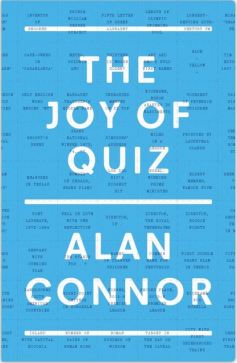 ‘Here’s a question: ‘Why do we spend our childhood in fear of exams, then quite willingly put ourselves through pretty much the same tests as adults?’ … The short answer is: fun. The joy of quiz is in making a gratifying game out of all that knowledge sploshing around in our heads – fascinating information, but information for which our jobs and our personal lives stubbornly refuse to find any use’.
 CREATE Ψ