
Kathryn Friedlander introduces us to her new book, which addresses a gap in the field of expertise studies, offering insights that range across diverse creative domains, from the arts to STEM fields, to puzzles and board games.
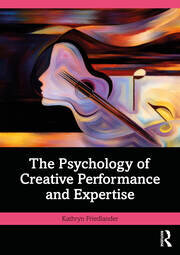
After 2½ years of hard but rewarding work, I am thrilled to announce that my new book, The Psychology of Creative Performance and Expertise, has been published by Taylor & Francis and is now available. This textbook serves as a resource not just for scholars but for students aiming to navigate the intricate and often puzzling landscape of human expertise and creativity.
Why This Book?
Since 2014, I’ve been introducing my module on Creative Performance and Expertise at the University of Buckingham with the same line: “I’m sorry – there’s no textbook for this field”. Despite the proliferation of academic handbooks on expertise in recent years, these volumes tend to cater to seasoned experts already familiar with the domain. What’s missing is a resource aimed at students—those just beginning to engage with these fascinating topics.
Filling a Gap in Expertise Research
The book not only bridges this gap by offering a student-friendly approach, but it also brings neglected areas of study into the spotlight. There’s a growing consensus that, despite the recent surge of interest in expertise research, most literature has focused narrowly on certain practice-intensive areas such as chess, music, and sports, often neglecting other key domains of human achievement—particularly the creative arts.
This oversight always struck me – with my background in the humanities, I found the imbalance curious. Why did so much emphasis fall on accuracy, replication, and skill when we know that creativity is often the cornerstone of high achievement? This led me to include disciplines such as art, dance, creative writing, and theatre in my own research and, ultimately, my teaching. My new book brings these domains to the forefront, emphasising the creative side of expertise and inviting future researchers to diversify their research and explore new areas of human achievement.
What’s Inside the Book?
With 16 chapters, The Psychology of Creative Performance and Expertise offers a comprehensive yet accessible guide to understanding the complex and multifactorial journey towards expertise. It covers a wide range of domains, including:
- The creative arts: music, dance, theatre/film, creative writing and art;
- Board games and puzzles, including quizzing and memory challenges;
- STEM fields, often overlooked as a creative expert domain.
By consolidating the scattered literature in these areas, I hope to inspire future researchers to pursue studies in creative domains more confidently, breaking away from conventional topics such as chess or sports.
Two dedicated chapters focus specifically on the intersection of expertise and creativity, highlighting areas such as aesthetic sensitivity and imagination—topics often underrepresented in traditional expertise research. There are also dedicated chapters on the facilitators of and obstacles to excellence in creative fields, including family influence, burnout, procrastination, stage-fright and gender-related challenges.
A First Look at AI and Expertise
In an era when artificial intelligence is rapidly advancing, I felt it was crucial to include a forward-looking perspective. The final chapter of the book explores how we might seek to enhance human performance using both traditional and more exotic means. With AI becoming more integrated into fields such as art, music, and problem-solving, the nature of human expertise is likely to shift. This chapter offers an initial exploration of these potential challenges, inviting readers to consider the ethical and practical implications of enhancing human performance, or even how AI might replace certain expert roles.
The Teaching Perspective
At its heart, this book is designed to be a practical resource for final-year undergraduates and postgraduate students. Expertise studies can be overwhelming, with competing theories and complex terminology. I’ve made a conscious effort to distil key concepts in a way that’s engaging, clear, and approachable. The book encourages students to think critically, question assumptions, and explore the subject in a way that aligns with their own academic and professional goals.
Each chapter starts with clear learning objectives and ends with a summary of key concepts covered. Readers will also find ‘challenge questions’—these can be used for self-study or group discussions in seminars and workshops. Additionally, the book contains several student-friendly features, such as boxed content that offers opportunities for reflection, debates, and deeper thought. These features are designed to spark curiosity and engagement with the material, ensuring that learning extends beyond the textbook.
I’ve also ensured that the book contains ample references for further reading, directing students toward more detailed discussions if they wish to pursue any particular topic in more depth. My goal has been to provide a solid foundation in expertise studies, while also lighting a path for students to follow in their future research.
Where to Get the Book
The Psychology of Creative Performance and Expertise is now available to purchase. Whether you’re a student, educator, or simply interested in understanding what it takes to achieve excellence, this book aims to provide valuable insights into the role of creativity and motivation in reaching the highest levels of human performance.
- For more information and chapter abstracts, visit here.
- To purchase a print copy, click here (it is also available from all usual bookshops including Amazon)
Thank you for your continued support, and I look forward to hearing your thoughts on the book!
A Bit About Me
For those who are new to my work, I am a psychology lecturer at the University of Buckingham, where my research focuses on expertise development and motivational drivers in both cognitive and creative performance domains. Together with my colleague Dr. Philip Fine, I have conducted research on expertise in UK-style cryptic crosswords and quizzing, visual imagery vividness, and creativity.
I designed and have been leading the undergraduate module on Creative Performance and Expertise since 2014, which has inspired much of the content in this book. My academic journey began at the University of Oxford, where I studied Classics and later completed a doctorate in Roman Comedy; and I have also studied in the field of Giftedness and Talent. My diverse academic background has given me a broad perspective on human achievement, which I aim to bring into both my teaching and my writing.
 CREATE Ψ
Pingback: Call for short commentaries: The Psychology of Creative Performance and Expertise | CREATE Ψ
Pingback: A Special Issue on Creative Performance and Expertise (Open-Access) | CREATE Ψ