
Elite quizzers are renowned for their extraordinary memories – but how do they acquire and retain such vast swathes of general knowledge? Philip Fine and Kathryn Friedlander explore their latest findings on quizzing expertise.
For some elite quizzers, study is essential – for others, it’s unthinkable.
In our recent study of Master-level quizzers, we found that many interviewees rejected the idea of formal study altogether. Several described how they soaked up facts incidentally through years of reading, watching, and listening, driven by a consuming curiosity.
But others spoke of many hours of hard drill acquiring potentially useful facts. This contrast – between deliberate practice and incidental learning – raises a key question for our understanding of quiz expertise: is exceptional memory trained, or is it simply a natural extension of a curious mind?
In our study, we interviewed seven top-tier quizzers: successful contestants in UK quizzes such as Mastermind, Brain of Britain, and University Challenge, including two professional quiz setters. Together with our MSc student Emma Foster, we analysed this qualitative data to get a better understanding of the minds behind the buzzers.
Soak it up – or study hard?
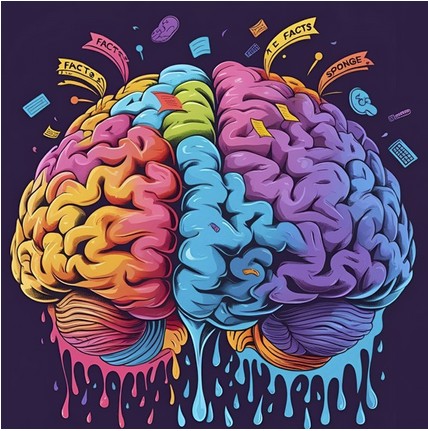
One striking finding was the contrast in how our contestants approached knowledge acquisition. Several described their learning as effortless and incidental: information seemed to “stick” just by reading, watching, or listening. Some likened their memory to a “sponge”, soaking up facts without apparent effort:
I enjoy discovering things through sort of being in the world, I suppose, having the radio on, reading and then recovering them. (P4, 336).
.
For these individuals, quizzing wasn’t about revision – it was about retrieval. They weren’t studying; they were remembering.
…the idea of learning lists and stuff … is just anathema to me (P7, 84).
But others took a very different approach. Several interviewees described structured routines designed to target their weaker areas – learning lists, drilling quiz formats, and tracking mistakes. One even estimated spending three to four hours a day on quiz-related practice. These quizzers didn’t rely on memory alone: they treated their knowledge bank as a resource that could be honed through effort. In some cases, they saw their success not as an aptitude, but as something they had deliberately built.
I wouldn’t say I was any different from the average: I made myself better (P6, 375).
“The Joy of Quiz“
This contrast between study and spontaneity was just one of seven themes to emerge from our analysis. Others included a deep ‘thirst for knowledge’ and the often extreme level of immersion in quiz-related and competition activities.
I have appeared on several TV programmes, in fact eleven to date (P5, 17).
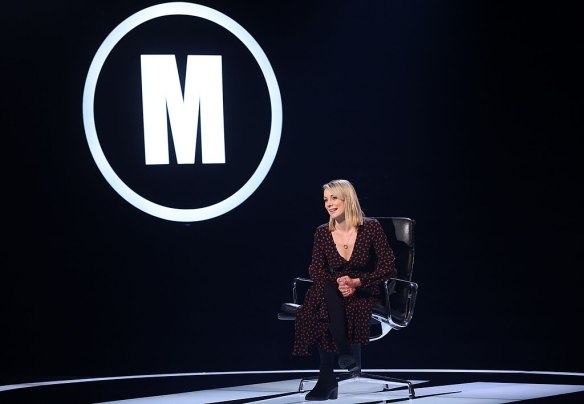
We discovered preferences for different formats of quiz (e.g., high brow vs. low brow, general vs. specialist, factual vs. lateral) and a wide range of intrinsic and extrinsic motivations that kept contestants engaged. What became apparent was the sheer level of enjoyment and fun derived from taking part in quizzing activities.
.
The joy of quiz is in making a gratifying game out of all that knowledge sploshing around in our heads. (Connor, 2016, p.3).
We also explored the traits they shared – including fast retrieval, curiosity, and – very often – competitiveness:
It’s this competitive drive, if you are in a competition then you wanna stamp all over the opposition, quite honestly, you know, okay and it’s not just winning, it’s utterly massacring the opposition…(P1, 262).
What’s next?
Our findings add a new perspective to the long-running debate about whether 10,000 hours of deliberate practice are really necessary for high-level mastery. Among our seven Master-level quizzers, some had indeed engaged in structured training – but others had done none at all. Their success seemed to stem instead from curiosity, immersion, and a naturally retentive memory. This echoes what we’ve seen in other domains, particularly cryptic crosswords, where elite solvers also report little or no deliberate practice.
The next step is to test whether these patterns hold true across a broader population. Using the insights from this qualitative study, we designed a survey to map quizzing expertise across all levels – from casual pub-quiz fans to international champions. That survey has now been completed, with over 500 responses, and we’re looking forward to analysing the results. They’ll tell us just how representative these seven voices are – and how expertise in quizzing really develops across the board.
If you’d like to know more, do take a look at our open access article in the Journal of Expertise:
Foster, E. J., Friedlander, K. J., & Fine, P. A. (2025). Mastermind and Expert Mind: A Qualitative Study of Elite Quizzers. Journal of Expertise, 8(1), 38–71. Read it here.
With sincere thanks to the seven expert quizzers who generously shared their time, insight, and enthusiasm for the world of quiz.
Image credits
- Quiz night image – https://pixabay.com/vectors/quiz-night-quiz-night-lights-text-2191229/
- Brain like a sponge – Canva image creator
- Mastermind 2022 – https://commons.m.wikimedia.org/wiki/File:Mastermind_2022.jpg#file
 CREATE Ψ
